
One of the wildest NFL coaching carousels in league history is finally showing signs of slowing down.
With 10 head-coaching vacancies in total after the Buffalo Bills’ stunning dismissal of Sean McDermott this week, the onset of the offseason was far more active than anyone could have anticipated. But half of the openings have now been officially filled, and the initial rush to secure the most in-demand candidates seems to have died off.
Given the myriad unknowns and extenuating circumstances when assessing what went right or wrong at the very top for any team, evaluating head-coaching hires can be notoriously difficult. With that said, here is our initial ranking of all the coaching hires so far:
1. John Harbaugh, New York Giants
On Black Monday, it seemed as though his year’s candidate pool lacked the equivalent of a Mike Vrabel or Ben Johnson. One day later, Harbaugh was thrown into the mix and became the clear headliner.
Expecting the former Ravens coach to replicate what the New England Patriots or Chicago Bears achieved in Year 1 of their new regimes would be unreasonable. Still, Harbaugh’s track record – just three losing seasons in 18 years – is the stuff of dreams for a Giants franchise tied for the fewest wins since 2017 (44).
Harbaugh was the one option this cycle who looked capable of flipping an organization’s culture, even if it required some uncomfortable shifts. Given how set in their ways the Giants have been, the transformation might not take place overnight. But Big Blue has seen sharp play-callers flame out, so inspiring hope was going to necessitate finding someone capable of addressing the very core of the organization.
In Harbaugh, they now have that.
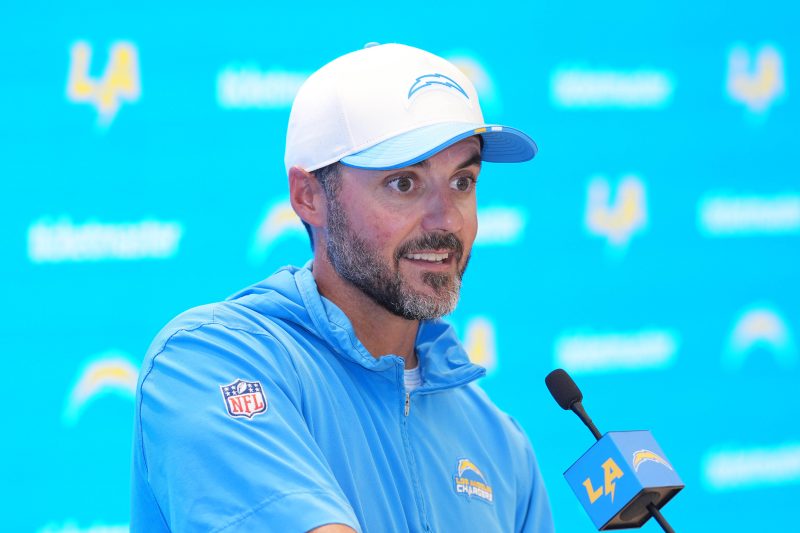
2. Jesse Minter, Baltimore Ravens
Parting with Harbaugh only to turn to a family disciple might seem like a strange move. But in hiring Minter, Baltimore can hold onto much of what worked for the previous regime while still finding a fresh voice and direction for the franchise.
Widely lauded for both his schematic acumen and his ability to connect with others, Minter already has an extensive track record of bringing along young players. That no doubt was a major draw for a Ravens team with a top-heavy roster and a firm commitment to developing home-grown talent. In Los Angeles, Minter’s remaking of the defense took hold almost instantly. The Ravens might be due for a bit more upheaval on that side of the ball than they’re accustomed to, but Minter could help the franchise return to its roots. At the very least, he can help the unit cut down on the considerable number of lapses that became an unfortunate running theme last season.
Of course, that fails to address a pretty crucial factor: Who guides Lamar Jackson and the offense? Securing the right offensive play-caller is one of the vital early steps for Minter, and succeeding on that front might necessitate finding another answer in a year or two if his coordinator of choice flourishes and earns head-coaching consideration. But there are several promising options available, all of whom should be eager to join this staff and work with a two-time NFL MVP in Jackson.
3. Kevin Stefanski, Atlanta Falcons
Given owner Arthur Blank’s impatience in ending the league’s second-longest active playoff drought, Harbaugh understandably would have been the big prize here. But landing a two-time NFL Coach of the Year should be more than a satisfactory outcome for the Falcons.
It’s fair to wonder how much blame Stefanski bears for an 8-26 record in his final two years with the Cleveland Browns. There’s no questioning his resourcefulness, though, and that trait should come in handy as he takes on a far less imposing undertaking than the one he had been saddled with. His wide-zone scheme is bound to be a boon for All-Pro running back Bijan Robinson, and he can help compensate for the lack of wide receiver threats beyond Drake London.
The hiccup here could be in the potential disconnect between Stefanski’s tendencies and quarterback Michael Penix Jr.’s strengths, which haven’t included attacking the middle of the field, working from under center or operating with reliable precision. Stefanski might have been best off coming aboard two years ago, when the team was first finding its way with his former pupil, Kirk Cousins. But Atlanta couldn’t afford to center its coaching search on Penix, who is coming off a torn anterior cruciate ligament.
Maybe this isn’t an outright moon shot. Yet with the NFC South still looking eminently winnable, this feels like substantial progress toward at least joining the conference’s second tier of contenders. Bonus points, too, for retaining defensive coordinator Jeff Ulbrich, who revved up the long-dormant pass rush and helped several young defenders break out in 2025.
4. Robert Saleh, Tennessee Titans
Perhaps feeling some pangs of remorse after parting with Mike Vrabel and giving an unproven entity in Brian Callahan a shot, the Titans went hard at second-time head coaches this cycle. In all, 14 of the 18 candidates they interviewed had prior experience running a franchise. With Saleh, Tennessee ended up doling out a second chance to someone who has shown enough to indicate things might go smoother than they did in his first go-around.
Perhaps the optics weren’t great in the early going, as the first three hires this cycle all materialized ahead of scheduled visits with the Titans. But credit Tennessee for not being overly rigid in their process, which many assumed would be focused on pairing 2025 No. 1 pick Cam Ward with an offensive play-caller for a head coach.
Saleh did superlative work in keeping a San Francisco 49ers defense ravaged by injuries afloat, and his plan to hang onto defensive play-calling duties while serving as head coach should facilitate an expedited turnaround on that side of the ball. Of course, the larger question is how he fills out his coaching staff on offense after he failed to set up a proper support system in his four seasons with the New York Jets. There were also plenty of mishaps with cultural development and locker room management in his first stop, but Saleh surely took away some lessons in what not to do at his next opportunity.
With Tennessee having an estimated league-high $93.5 million in cap space, according to Over The Cap, and few promising pieces beyond Ward, Saleh at least sizes up as someone who should prove skillful in building from the ground floor.
5. Jeff Hafley, Miami Dolphins
By no means is Hafley an egregious hire. After his two years as the Green Bay Packers’ defensive coordinator, it seemed as though he’d rank among the more attractive potential first-time head coaches. And with Miami bringing aboard fellow Packer ex-pat Jon-Eric Sullivan as general manager, there’s solid alignment here for a franchise that’s probably staring down a full-scale reset in 2026.
But there’s a bit more of an unknown element to him than there is for others on this list.
Hafley managed to revitalize the Packers’ defense almost immediately upon his arrival. His creativity in navigating the unit’s deficiencies at various points augurs well for a team that presents a plethora of its own shortcomings. The Dolphins could also stand to benefit from a shift in accountability after repeatedly reverting to finger-pointing under Mike McDaniel.
Still, this is a lot to take on for someone whose only prior head-coaching experience was at Boston College. The Dolphins probably made the shrewd move in riding things out with a fresh face rather than expecting a retread hire to turn things around right away. But Hafley might have a harder time than some of his peers in filling out a staff capable of accounting for all his blind spots as he takes the wheel.