
As debates wage across the country over what schools should make the 12-team College Football Playoff field, spirited discussions on the future of college sports are taking place somewhere else — in the hallowed halls of Congress.
And one legislator in particular has an interesting idea about how college athletics can be saved from what he believes is an untenable situation.
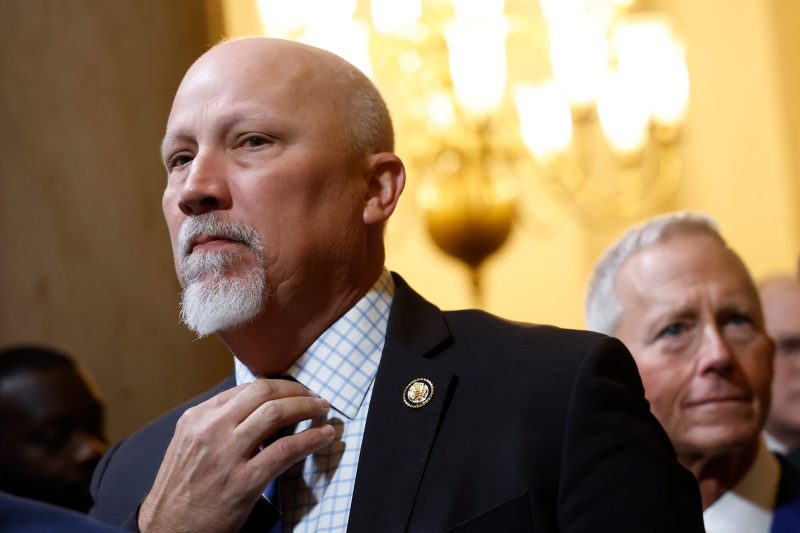
During a House Rules Committee meeting on Monday, Dec. 1 to discuss a bill that would provide a federal framework to help regulate college sports, Rep. Chip Roy (R-Texas) suggested that the federal government could “fully intervene” to fix a number of ongoing issues in college athletics, including the size of major conferences.
“I don’t know what we’re doing, what the powers that we have here in engaging and interfering with states, but if we’re going to take a big federal step because the federal court intervened, and we’re going to intervene, well, then maybe we should fully intervene,” Roy said. “Maybe we should fix the damn mess so that we don’t have 16 teams in the SEC and 17 teams in the ACC and 19 teams in the Big Ten and frigging Stanford and Berkeley on the west coast in the Atlantic Coast Conference, all because of money. It’s just laughable that this is anything but a massive money-grab.”
The committee discussion revolved around the SCORE Act, a bipartisan piece of legislation that would allow the NCAA, and potentially other governing bodies like the recently formed College Sports Commission, to create and enforce national rules regulating college sports, some of which have been disputed in court in recent years.
The SCORE Act (Student Compensation And Opportunity Through Rights and Endorsements) would permit the NCAA to set a cap on how much schools can spend on NIL deals and establish rules on player transfers, provided that athletes can transfer at least once and be immediately eligible. If passed, the measure would also allow for the fair-market-value assessment of athletes’ NIL deals with third parties, permit universities to prohibit athletes from having NIL partnerships that conflict with existing school sponsorship deals and, perhaps most notably, shield the NCAA, the Commission, conferences and schools from antitrust and state-court lawsuits.
Roy said the bill is “designed to get through” and get passed, with college athletics’ major conferences like the Big Ten and SEC “pushing it hard.” He offered critiques of the SCORE Act, describing it as “a band-aid on a gunshot wound.”
His criticisms didn’t end there, with Roy taking aim at the current college football coaching carousel, which has seen four of the five largest buyouts in the sport’s history over the past two months, all of which are over $30 million.
“Why in the hell are we allowing coaches to walk out and be paid not to coach for years? It’s insane,” Roy said. “What we just saw unfold with Lane Kiffin is just an absolute abomination. People say, ‘Well, this is the market working, Chip. This is the market forces at play.’ This is not supposed to be a market. Not in that classic sense. Yes, college sports can compete with the NFL for revenue. Yes, college sports can compete with other entertainment dollars. I get that. But this is not supposed to be an NFL light. But yet, that’s how we’re treating it.”
Roy is a former college athlete, a three-year letter winner on the golf team at Virginia. Earlier this year, the fourth-term congressman announced he was running for Texas attorney general, a race in which he’s viewed as the frontrunner.